A Sketch of an Interesting Life
My dad, Patrick Michael Fleming, passed away in August. My mom, Bronwen Claire Fleming (née Scoones) has Alzheimer’s, and can no longer recall details. But they lived very interesting lives. Their experiences included:
- Earning a Silver Star for service with Marines Force Recon in Vietnam
- Working for a private military contractor in postcolonial Africa
- Nursing at the oldest hospital in South Africa
- Owning and operating an international chemical company and then a cattle ranch
- Playing professional poker
- Starting a successful dog-walking business
Now that I no longer have the chance, I regret not asking them about their lives before I was born. And I especially regret not writing down the memories they did share. I am contacting family and friends to fill in some gaps, so if you knew my parents, I’d love to hear from you.
In this post I share a sketch of their lives, pieced together from the responses I’ve received so far, and from my own vague memories.
1960s: Vietnam and Force Recon
My dad was born and raised in Columbus, Ohio, in 1946. At 16 he dropped out of high school and joined the Marines, eventually serving with 1st Force Recon in Vietnam. He never said much about his time there, partly because he didn’t want to be “an old guy telling war stories,” and partly because he was never sure what parts of his service were still classified.

“Marine” was very much a part of my dad’s identity, but he spoke about Vietnam mostly in general terms, and shared very few details. I’ll save those details for a later post, while I continue to ponder his incomplete DD-214.
He also kept a small box with some personal items. I remember looking through the box as a kid, and after he passed I found it tucked in the back of a drawer.
Among its contents are his service medals (two Purple Hearts, a Bronze Star, and a Silver Star) and some other memorabilia, including this lighter, which has this text engraved on the back: “Our thanks and admiration for a job well done Col. R. G. McGuire 1st Forced [sic] Recon United States Marines.”
1970s: Africa
My dad moved to Australia after leaving the Marines. As he put it, he had no skills except walking in a jungle carrying a gun. He worked menial jobs until he met a recruiter for a private contractor based in South Africa. He told me the name of the company, probably more than once. I should have written it down.
This was the 1970s, and many African nations had recently declared independence from European colonizers. Based on the timing, he might have worked for Idi Amin in Uganda, or Mobutu Sese Seko in Zaire. To the extent that he talked about the politics of it all, he espoused a common cynicism. From childhood I knew the phrase, “one man, one vote, once.”

After leaving that “security company,” or maybe even simultaneously, my dad took a job selling industrial chemicals in South Africa. He was a good salesman, and in 1976 he and Dave Petre started a business together. They partnered with Zep, an American company. My dad mentioned Harry Maziar a few times, always with admiration, and this business card was among his mementoes. I don’t know precisely what the business was, but it evolved into MarProZep Chemicals.
My dad raced motorcycles, and at some point in the mid-70s he was in a bad accident. He broke most of the bones in his face, and needed a steel cage to keep them in place while they healed.
My mom was his nurse. She had grown up in Pietermaritzburg, and attended Epworth School before starting her nursing career at Grey’s Hospital, which dates to the 1850s. At the time, it was the oldest hospital in South Africa still operating on its original site.
My parents were married on March 7, 1980, in a magistrate’s office in Randburg; their marriage certificate lists an address in Sandton (both are suburbs of Johannesburg). My mom’s mom was sick with cancer, and I know they wanted to marry before she passed.
When I asked my mom’s brother about the next stage of their lives, he recalled that they lived “in Johannesburg where I think he made a lot of money” and then “I suspect that your Dad foresaw future political problems in South Africa, and they moved to the UK to set up the same type of business. They did not really fit in with the English lifestyle. Patrick went pheasant hunting but found the English rather unfriendly. He had a bad experience with the police due to his Irish sounding surname.”
Those recollections match what I knew. South Africa was facing increased criticism for apartheid (hence the “future political problems”), and restrictions were placed on moving capital out of the country. My parents took some gold and diamonds hidden in oil barrels and an elephant tusk. They kept the bulk of their savings in a South African bank, which they used as collateral for some kind of currency exchange investment through a bank in Switzerland.
My dad felt it was enough to retire.
1980s: Canada, Cattle Ranching, and Turnaround Investing

My parents’ time in England was brief, and even the few details my uncle shared are more than I knew before. When I was born in 1982, my parents had a cattle ranch in Grand Forks, British Columbia (current population about 4,000, according to Wikipedia) and a home in Las Vegas. The cowbell in the picture was a fixture in my parents’ home.
Supposedly, my dad offered to build a compound with houses for my mom’s family, who were still living in South Africa. They weren’t ready to leave. (Eventually they would emigrate, my aunt to the Netherlands and my uncle to New Zealand; my grandfather lived in the same house in Pietermaritzburg until he died in 2001).
They made lifelong friends with another farming family, Freda and Charlie Ericson, but then moved to Kelowna. My dad worked as a “turnaround investor,” buying companies that were in trouble, helping them get things together, and then selling them. I vaguely remember a company called Rollmaster sponsoring a field day at my elementary school. In my memory they made toilet paper dispensers, but maybe it was this conveyor company. Or maybe it was something else entirely: “Rollmaster” is a generic enough name.
The first home I remember was a blue house on a lake. A neighbor would take us out on his boat to look for Ogopogo, so I always thought it was Lake Okanagan. But after my dad passed, a neighbor from their Kelowna days referred to a house on Shannon Lake. He also wrote: “I will never forget the generosity of Pat when I lost the position I had with the company that I was working for. It was a desperate situation for me, and Pat stepped in and bought a company for me to manage.”
That sounds like something my dad would have done.
1990s: Australia, Professional Poker, and Bankruptcy
Around 1989 we moved from Canada to Adelaide, Australia. I don’t exactly know why, except that my dad had fond memories of Australia from his 20s. I know they were deciding between Perth and Adelaide, and I went to Scotch College, so getting me admitted there might have been a factor.
But my dad was frequently traveling to poker tournaments, and in 1992 we moved to Las Vegas, Nevada. According to a poker friend who knew my dad since before I was born, he was particularly excited to get me into The Meadows School, where another poker friend’s kids were attending.
My parents settled in Vegas, and I attended the Meadows until I graduated high school in 2001. My dad played poker professionally, and at 47 years old he was “considered by many of his peers to be one of the best super-satellite players alive.” He was very social, and his poker friends were always at the house. Some of those friends (Michael Konik, Annie Duke, Chris Ferguson, and others I’ve forgotten) became, if not household names, then at least well-known even outside the poker world.
My mom started working during this period, too, first doing temp work as a medical transcriptionist and then managing the office for a psychologist’s private practice. At the time I didn’t think much of it. How much do pre-teens think about their parents’ careers?
I learned, many years later, that the South African bank, where my parents still had most of their assets, had collapsed. The Swiss bank, where my dad had the bulk of his investments, realized they no longer had those assets as collateral backing them. My dad’s usual banker was on vacation, as was his secretary. My dad maintained that if they had been in the office, things might have gone differently. But the banker who got the call just knew that his bank’s own assets were exposed. My parents’ life savings were liquidated within minutes.
So my mom’s new career, and my dad’s shift from casual poker player to professional, were not so much choices as necessities. I was oblivious to that, for an embarrassingly long time.
2000s and after: New Careers
I was a competitive swimmer growing up, and the natural summer job was to be a lifeguard. In high school and college, I spent my summers working at Paris, Las Vegas.
My dad thought that seemed fun, so in his mid-50s he got certified as a lifeguard and put in some applications, including one to Bally’s (now called the Horseshoe). Bally’s is right next to Paris, and the pools had the same manager. When he saw my dad’s application he thought it was mine (we have the same name), and called me to ask why I was applying to Bally’s instead of Paris. When I explained the situation, he told me he’d hire my dad if I’d start at Paris a week earlier than I’d planned.
So while my friends’ parents who worked in casinos were getting them jobs, I got my dad a job.
Many Vegas lifeguards are high school or college kids looking for a summer gig. My dad’s willingness to work after school started again made him a valuable employee. He was poached by Treasure Island, then again by the Monte Carlo (now Park MGM).

Lifeguarding was a brief career, maybe less than a year. And he was still playing poker, traveling to tournaments in California and, then, as poker got bigger and bigger, playing tournaments online.
But I like to think of lifeguarding as his last career. Like me, he was a swimmer in high school. He kept some of his ribbons from the Aquamarine Cabana Club, in Columbus, Ohio. I found them in his memento box after his death.
So in a way, lifeguarding brought a fascinating life back to a point of origin.
When I went to college my parents moved to a smaller house in Las Vegas, which they thought would be a short-term place. They lived there for 20 years, longer than either of them had ever lived in a single house.
My mom worked for the same psychologist for 17 years. Then I think she made some kind of mistake; the details are hazy, but he fired her somewhat abruptly. She started her own business, walking dogs in the neighborhood and caring for them while their owners were on vacation.
My parents had always had their own dogs. Growing up I heard stories about their two German shepherds, Lucky and Tammy. When I was a kid we had a golden retriever (Sheba) and a Rottweiler (Shadow), and when I was in college they had a black lab, Tandy. Tandy had died by the time my mom started her own business, but when I would visit, she nearly always had a dog in the house. The business paid their bills that whole time.
After Covid my parents sold their house in Las Vegas and moved to Leesburg, Florida. My dad lived his final years there. He was initially excited about the new chapter, and they had some good experiences. They got another black lab (which my son named Oreo), and made friends at the dog park. But my dad was diagnosed with Parkinson’s, then had a fall and broke his shoulder. My mom’s memory decline was probably sped along by all the stress. They were in Florida less than four years.
When I think of my parents’ lives, though, the last quarter-century isn’t what comes to mind. They lived many lives, before I was born, and I am doing my best to learn more about that period.
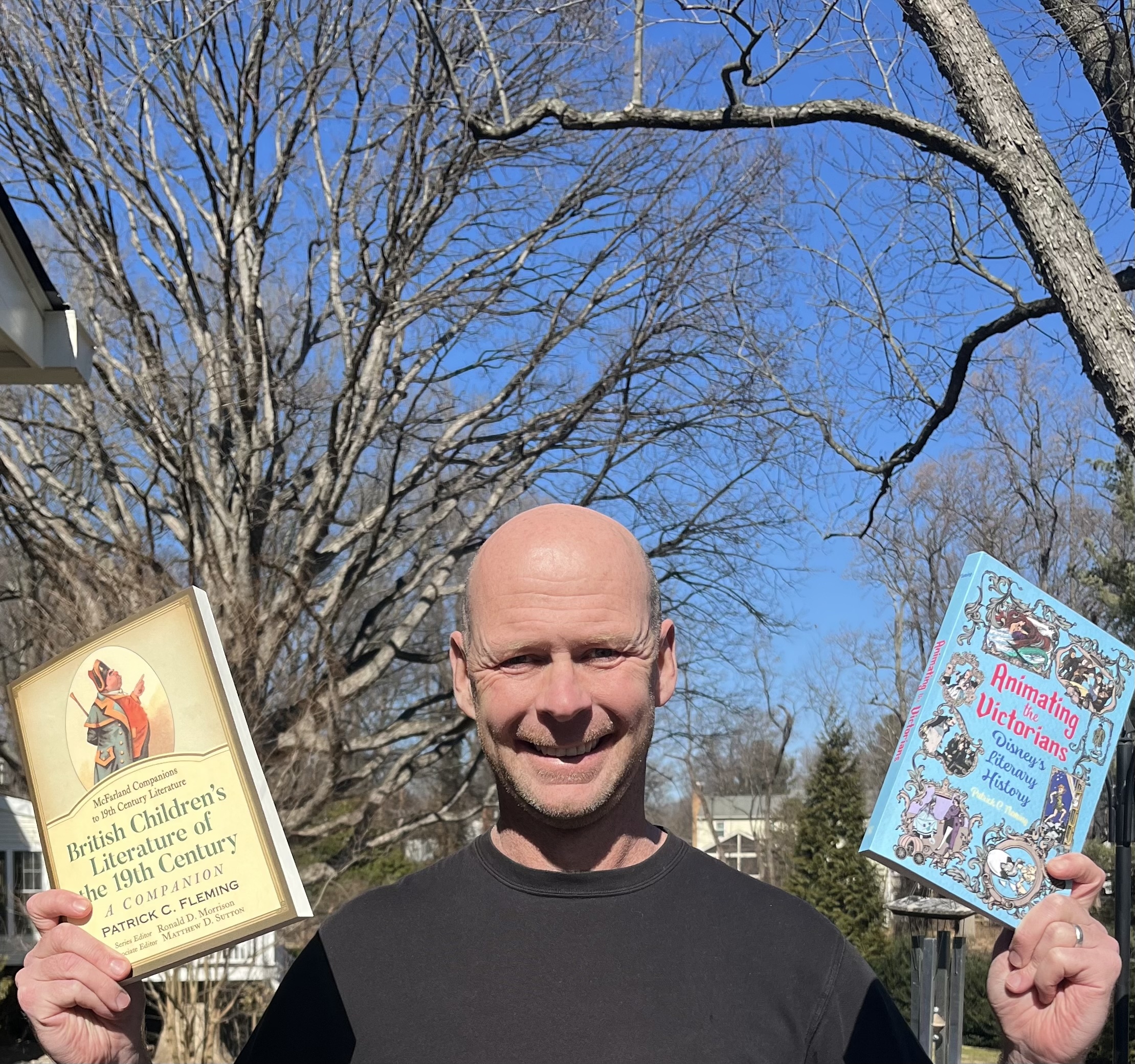
About The Author

What a great story about your parents.
I really enjoyed spending time with them in Vegas.
I’m sorry we kind of lost touch.
Do you think your mom would remember me if I called her?
I’m sorry to hear about your dad.
Thank you so much, Jo! And yes, she would love to hear from you.